 |
|
|
Thinking about change (cont.)
|
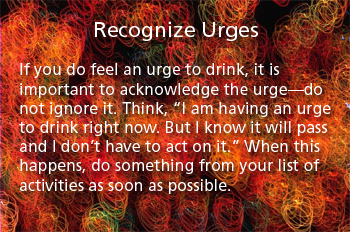
What Can I Do To Handle An Urge To Drink? Urges are normal for a person who is reducing the amount that they drink. Urges are often very difficult to deal with, but with practice, you will be able to let these feelings pass without having to react to them. You might notice that, after stopping or cutting back on your drinking, you get more urges to drink than you did before. This is normal. What is important is that you recognize that these urges are temporary—they will pass. The sight and/or smell of alcohol, as well as being in situations that remind you of past drinking experiences, might trigger a craving. It is important to think about the situations and/or experiences that might trigger a craving for you, so you can recognize them ahead of time and find ways to stop yourself from giving in to the urge to drink that you might feel. 34 Though everyone reacts to different triggers, there are some that seem to affect many people, such as anger, anxiety, depression, boredom, an argument with a friend or family member, being around other people who are drinking or in situations where drinking might occur (celebrations, etc.), and seeing advertisements for alcohol or passing places where it is sold. 35
|
When do you feel the strongest urge to drink? It is important to think of ways to handle such situations constructively so you are able to continue keeping your promise to yourself to change your relationship to alcohol. It often helps to focus on another activity. Many people find it helpful to have in mind a list of things they enjoy doing, which will help take their mind off cravings. Make a list of those things you enjoyed before drinking became a part of your life:
Get involved with these old activities again; you might have forgotten just how much you enjoy doing them. Keep this list with you at all times so that you can refer to it should you get an urge to drink. |
|
Other ways to deal with urges If your urge is so great that you cannot focus on your new way of thinking or an activity on your list, say, “Okay, maybe I’ll drink in 10 minutes.” Then wait 10 minutes. If the urge is still there, keep telling yourself to wait just 10 minutes. Find other things to do from the list you made for each 10-minute interval. The urge to drink will pass with time. Now, call or visit a friend or family member that you trust. Talk about your urges to drink and how you are dealing with these feelings. Friends and family who support your decision to change will play a big role in helping you achieve your goals. Some people in your life, however, might not want you to change, and these people could encourage you to drink. If you know someone who may do this, avoid contacting that person—especially when you are experiencing an urge to drink. |
“What if I drink and I really don’t want to?” If you find that you drink even though you are trying to quit, you are not alone. Many people find that it takes several attempts to quit or cut down on their drinking. Stopping or reducing drinking is a very difficult thing to do and you may not be able to do it the first time you try. Remember that many people don’t even get this far. By asking for information and thinking about change, you have already begun your journey to a safer, happier, and healthier life. If you do drink and you don’t want to, that does not mean that you will never be able to stop. Research shows that 50%-60% of people treated for alcohol abuse and/or dependence have a drink within 3 months of ending treatment. If you find yourself drinking after you have decided to try to stop, try to view it as a “bump in the road.” 36 You can learn much from looking more closely at such a slip and figuring out why and how it happened – this might help you handle a similar experience in the future. Keep trying, keep talking to people you trust, and keep asking for help. Going back to drinking doesn’t make your goals any less valuable or less possible. |
Some other things to try:
Attend self–help meetings such as Alcoholics Anonymous.
Avoid going in or near places where drinking is prevalent, or places you used to go to drink.
Spend less time with people who drink to avoid pressure to drink.
Hopefully this guide has helped you think about change. It is a starting point, as well as a roadmap for the process of change. Thinking about change is not always easy. Should you decide a change is right for you, you will encounter many obstacles along the way. Expect them and be prepared. Your journey may be difficult at times, but it will be well worth it.
|
|
|
|
Copyright © Division on Addictions - Cambridge Health Alliance - Harvard Medical School